
Breakthrough T1D-Led Paper Outlines First International Consensus Guidance for Continuous Ketone Monitoring in Diabetes
Framework provides recommendations for effective CKM use for those at risk of diabetic ketoacidosis
New York, Dec. 10, 2025 — Breakthrough T1D, the leading global type 1 diabetes (T1D) research and advocacy organization, announced the publication of a paper in the journal The Lancet Diabetes & Endocrinology that provides the first international consensus framework for the use of continuous ketone monitoring (CKM) in people with diabetes.
The paper, “Continuous ketone monitoring for people with diabetes: international expert recommendations on the application of a new technology“,” was authored by an international team of experts led by Breakthrough T1D Chief Medical Officer Thomas Danne, M.D., Dr. Ketan Dhatariya (Norfolk and Norwich University Hospitals / University of East Anglia) and Dr. Richard Bergenstal (International Diabetes Center, HealthPartners Institute). The paper offers standardized, practical guidance for clinicians and the broader T1D community as CKM technology becomes available and is integrated into diabetes care.
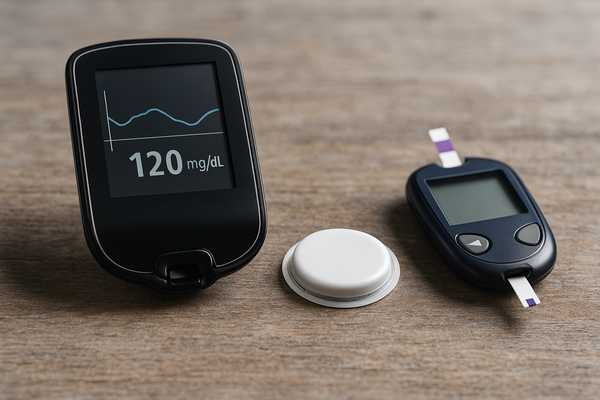
Diabetic ketoacidosis (DKA) is a life-threatening complication that arises when the body breaks down fat for energy because of insufficient insulin, causing ketones to accumulate and blood to become acidic. DKA can occur unexpectedly and often in connection with intercurrent illnesses such as influenza. Although ketones can be detected with blood or urine strips, these tools are not always used routinely and cannot provide continuous early warning. Similar to continuous glucose monitors, CKMs continuously measure ketone levels and can alert users and caregivers to rising ketones, helping to identify and prevent DKA and to support safer diabetes and insulin management.
“Continuous ketone monitoring has the potential to be a transformational new technology for people living with diabetes who are at risk of DKA,” said Thomas Danne, M.D., Chief Medical Officer at Breakthrough T1D. “This consensus guidance will help ensure the diabetes community is prepared to use CKM effectively once devices are available, improving health outcomes for people facing this complication.”
Breakthrough T1D convened and led 33 international experts from 14 countries to develop the consensus. Recommendations cover common terminology for ketone levels, visual device elements to indicate rates of ketone change, alarm thresholds and triggers, patient and clinician ketone education, and other practical considerations. The guidance supports Breakthrough T1D’s mission to accelerate clinical adoption of new treatments and technologies for T1D.
About Breakthrough T1D (formerly JDRF)
As the leading global type 1 diabetes research and advocacy organization, Breakthrough T1D works to improve everyday life with T1D while driving toward cures. The organization invests in promising research, advocates with governments on issues affecting the T1D community, and educates and empowers people living with T1D.
About type 1 diabetes (T1D)
T1D is an autoimmune condition in which the pancreas produces very little or no insulin. It results in dependence on insulin therapy and a risk of both short- and long-term complications, including dangerous highs and lows in blood glucose and damage to the kidneys, eyes, nerves and heart. T1D affects an estimated 9.5 million people worldwide. Although often associated with childhood, nearly half of T1D diagnoses occur in adulthood. The causes are not fully understood and are believed to involve genetic and environmental factors. There is currently no cure for T1D.
Contact
Casey Fielder
509-651-0087
[email protected]
SOURCE: Breakthrough T1D, Formerly JDRF